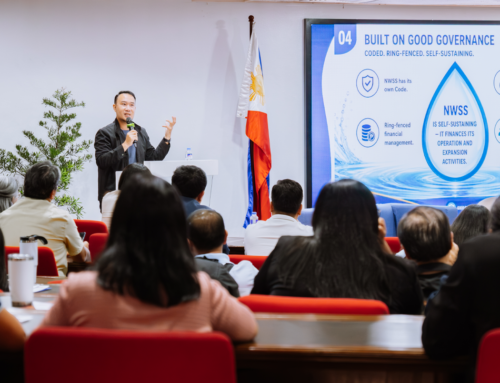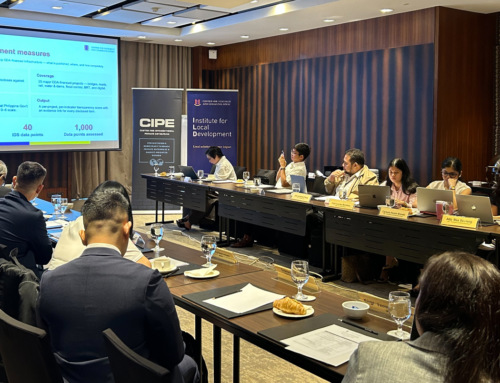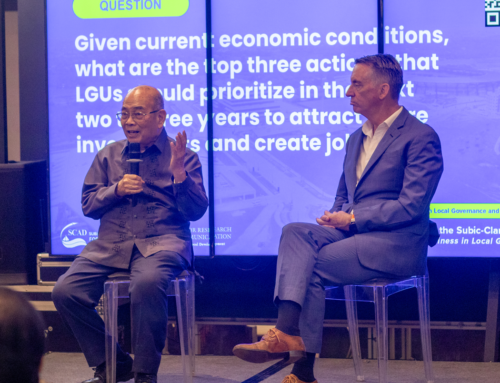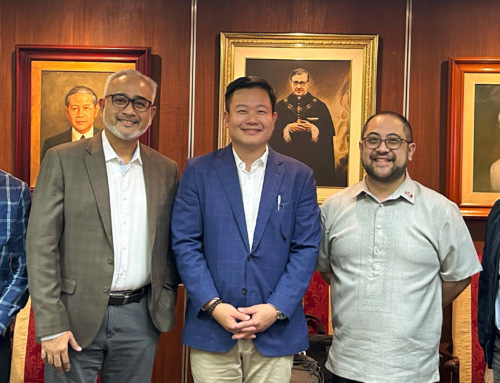
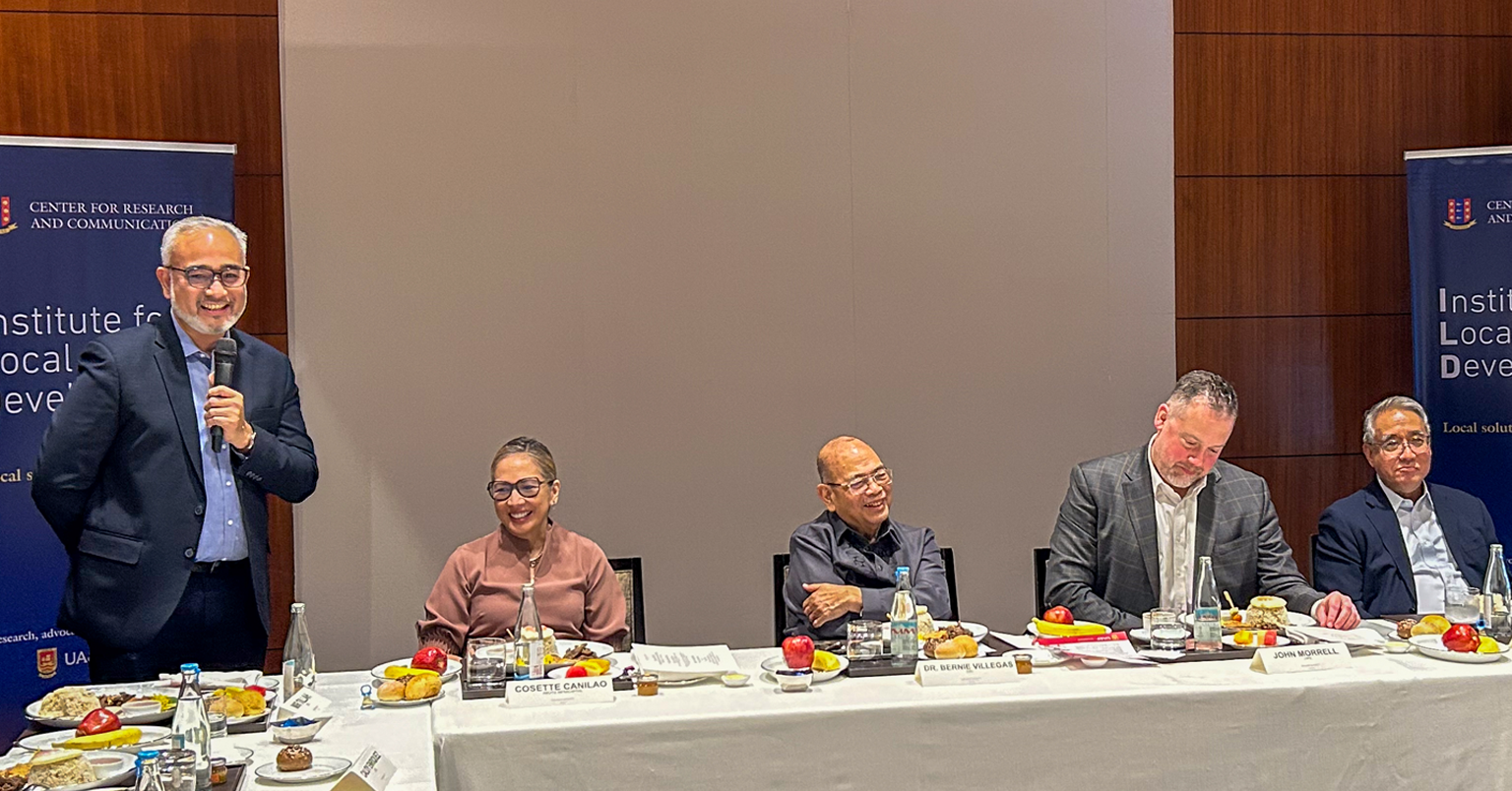
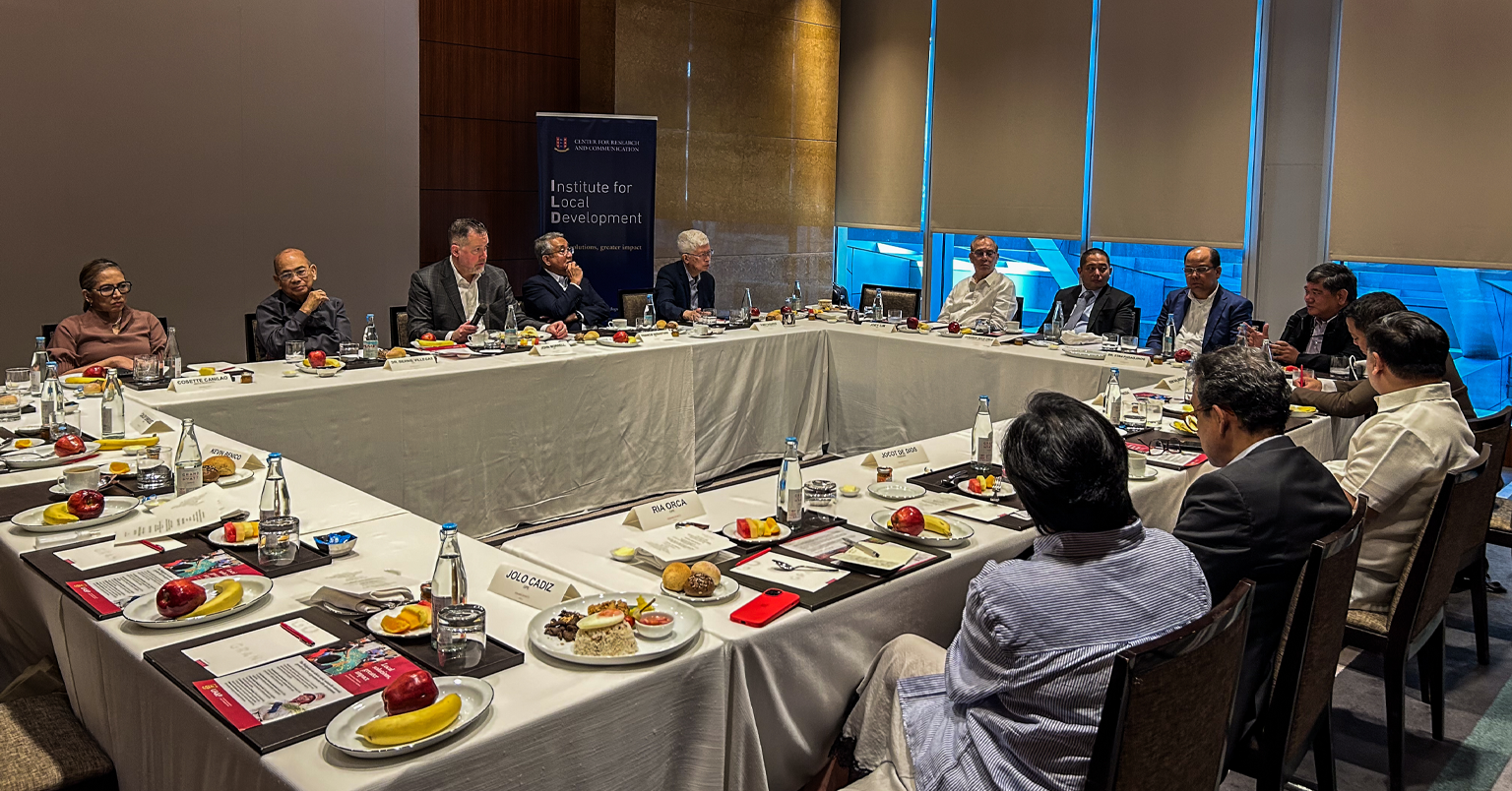
CRC convened a high-level dialogue on infrastructure development, bringing together leaders from the public policy, infrastructure, and business sectors to discuss infrastructure governance. Pictured (from left): Mir Tillah, Director of the CRC Institute for Local Development; Cosette Canilao, President and CEO of Aboitiz InfraCapital; Dr. Bernardo Villegas, CRC Co-Founder and Research Director; John Morrell, Asia-Pacific Director of the Center for International Private Enterprise (CIPE); and Francisco Sebastian, Chairman of GT Capital Holdings and CRC Trustee.
Senior executives from the Philippines’ top infrastructure, energy, water, telecommunications, and investment firms convened with representatives from the Center for Research and Communication (CRC) and a delegation from the U.S.-based Center for International Private Enterprise (CIPE) for a high-level dialogue focused on strengthening infrastructure governance, accelerating project delivery, and promoting transparency in foreign-assisted projects.
The dialogue, held at Grand Hyatt Manila on May 20, 2026, underscored the indispensable role of infrastructure development in driving sustainable and inclusive economic growth, even as the country faces macroeconomic headwinds and concerns over potential slowdown due to global and local political economic uncertainty and disruptions.
Economist and CRC Founder Dr. Bernardo Villegas stressed the urgency of stronger private sector engagement, emphasizing the need to attract more Foreign Direct Investments to sustain long-term growth and offset the country’s high debt-to-GDP ratio. Modern and efficient infrastructure — including transport, logistics, energy, and digital connectivity — was identified as a critical enabler for deeper industrialization and attracting foreign capital. According to Villegas, this is an urgent need so that the Philippines does not get stuck in the “middle income trap,” an economic phenomenon where formerly developing countries never become fully developed and get stuck in middle income status, where some countries in Latin America are now.
The discussion highlighted the viability of the Public-Private Partnership (PPP) model, with Ms.
Cosette Canilao, President and CEO of Aboitiz InfraCapital and former head of the Philippine PPP Center, noting that the new PPP law enables private companies to unlock resources and expertise for building and maintaining facilities like airports and water systems. While a majority of projects today are financed locally, participants urged the government to address bureaucratic hurdles, procurement delays, and complex implementation timelines that keep projects too lengthy, complex, and slow to deliver.
The private sector leaders suggested that lessons from private firms who have experienced unsuccessful, stalled, or significantly delayed infrastructure projects involving government processes must be collected to help identify regulatory bottlenecks, permitting inefficiencies, procurement delays, and other structural problems that slow infrastructure projects.
A central focus of the meeting was the urgent need for transparency and proper governance safeguards, particularly in foreign-assisted infrastructure projects. CIPE Managing Director Abdulwahab Alkebsi and Asia-Pacific Director John Morrell introduced CIPE’s Infrastructure Watch Asia and Africa initiative, aimed at helping countries in the two regions remain vigilant against “corrosive capital” and opaque financing arrangements that could compromise national sovereignty and economic stability. Mr. Morrell cited international examples where foreign-assisted agreements, often characterized by unclear financing and limited public transparency, resulted in disadvantageous terms for borrowing states. The consensus was clear: while borrowing for infrastructure is not inherently problematic, democratic governance demands openness and accountability when public interest and national resources are involved. To address these governance gaps, CRC and CIPE are collaborating on a Philippine component of Infrastructure Watch.
Participants welcomed Infra Watch Philippines as a constructive step that will improve public accountability, promote higher transparency standards in governance, and eventually strengthen investor confidence in the sector.
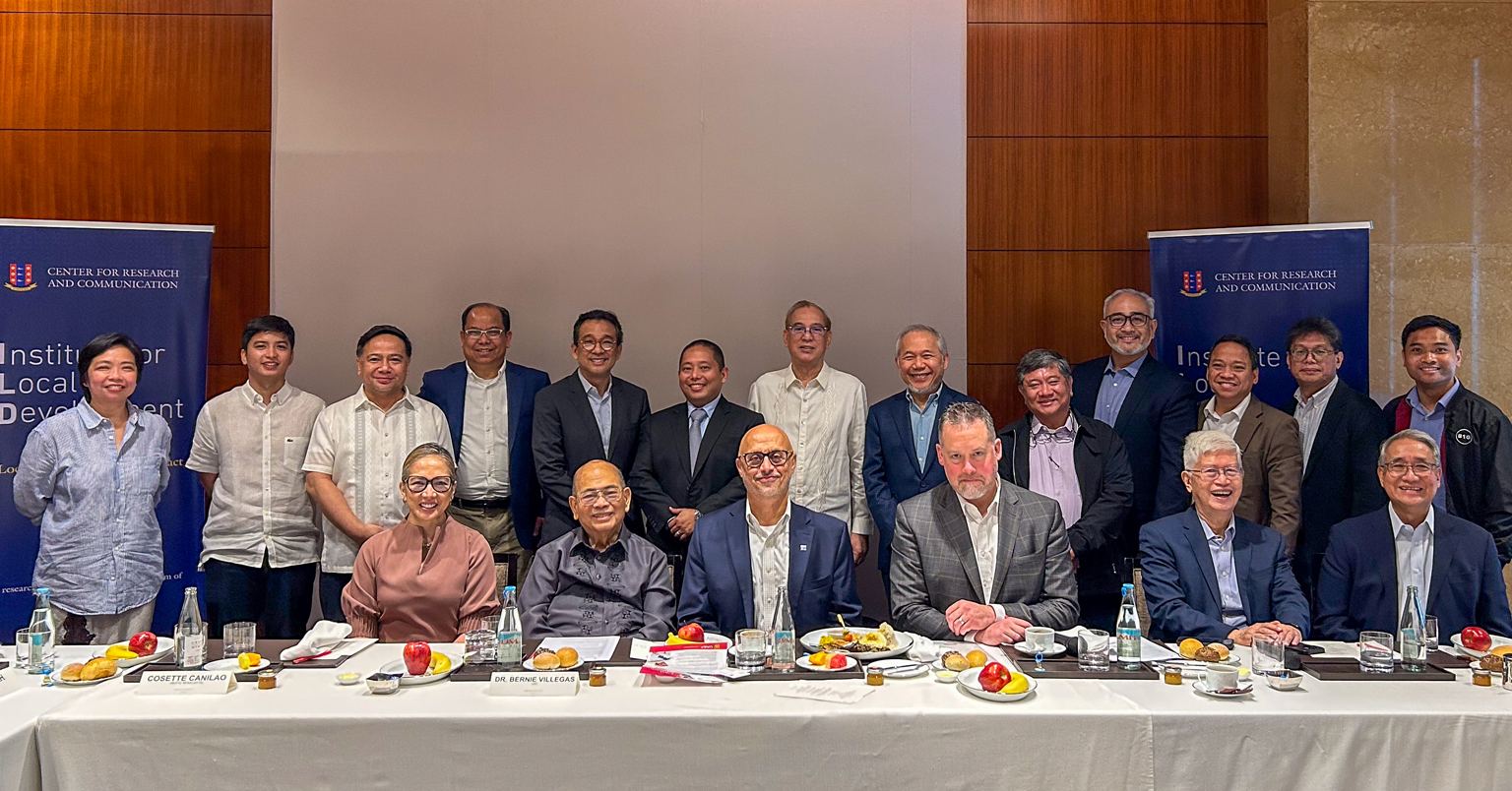
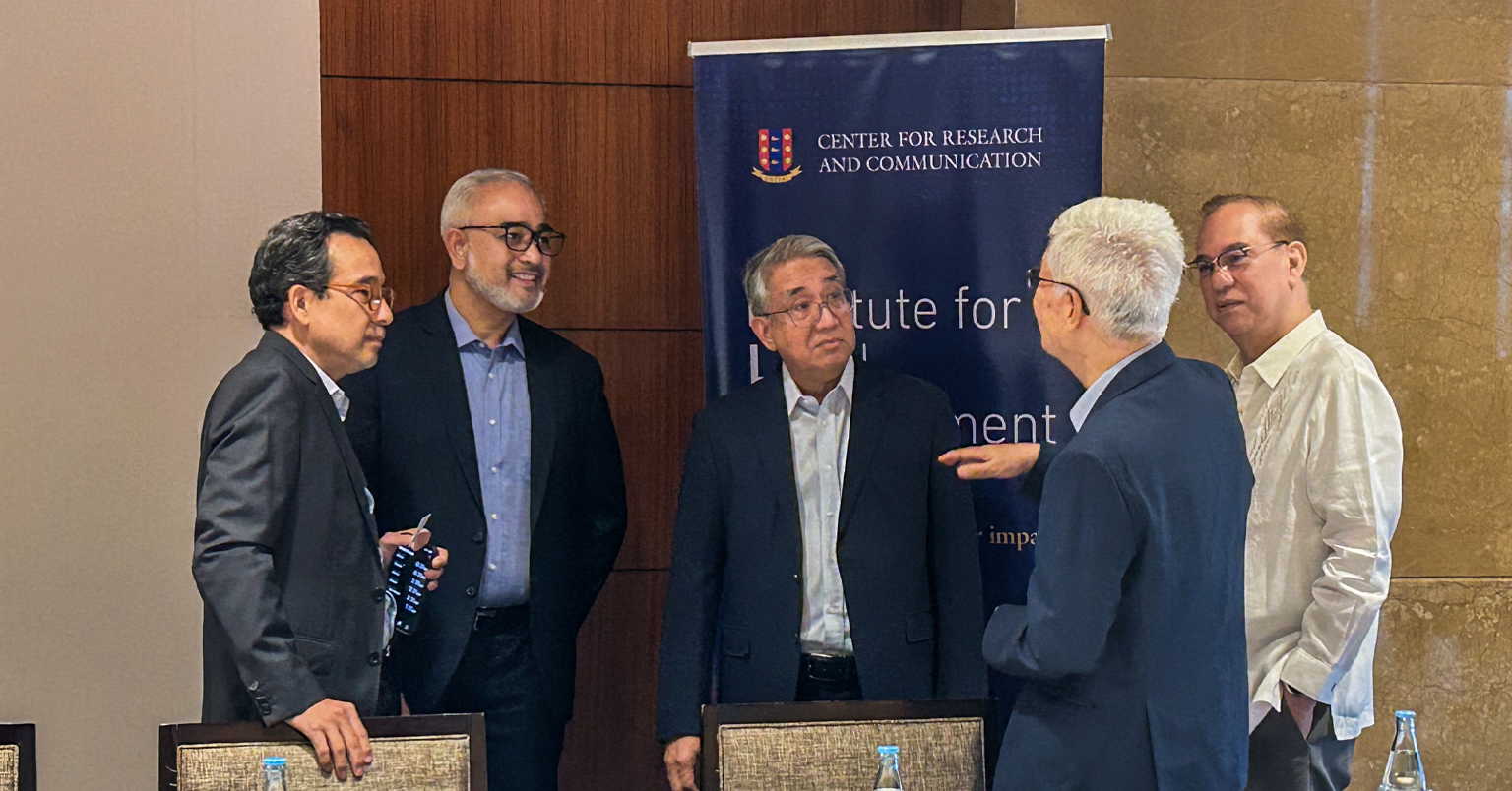
Senior executives from leading infrastructure and investment firms joined a high-level dialogue on strengthening transparency in foreign-assisted infrastructure development projects.
—
About the Center for Research and Communication (CRC)
Established in 1967, CRC is one of the country’s leading think tanks, recognized for independent, evidence-based research. It is a research, advocacy, and development arm of the University of Asia and the Pacific.
About the Center for International Private Enterprise (CIPE)
CIPE works to build economic and democratic resilience by strengthening governance frameworks that ensure accountable investment benefits citizens, businesses, and democratic institutions. CIPE launched the Infrastructure Watch in Asia and Africa initiative in February 2026 to monitor large-scale foreign-financed projects and counter “corrosive capital” practices.