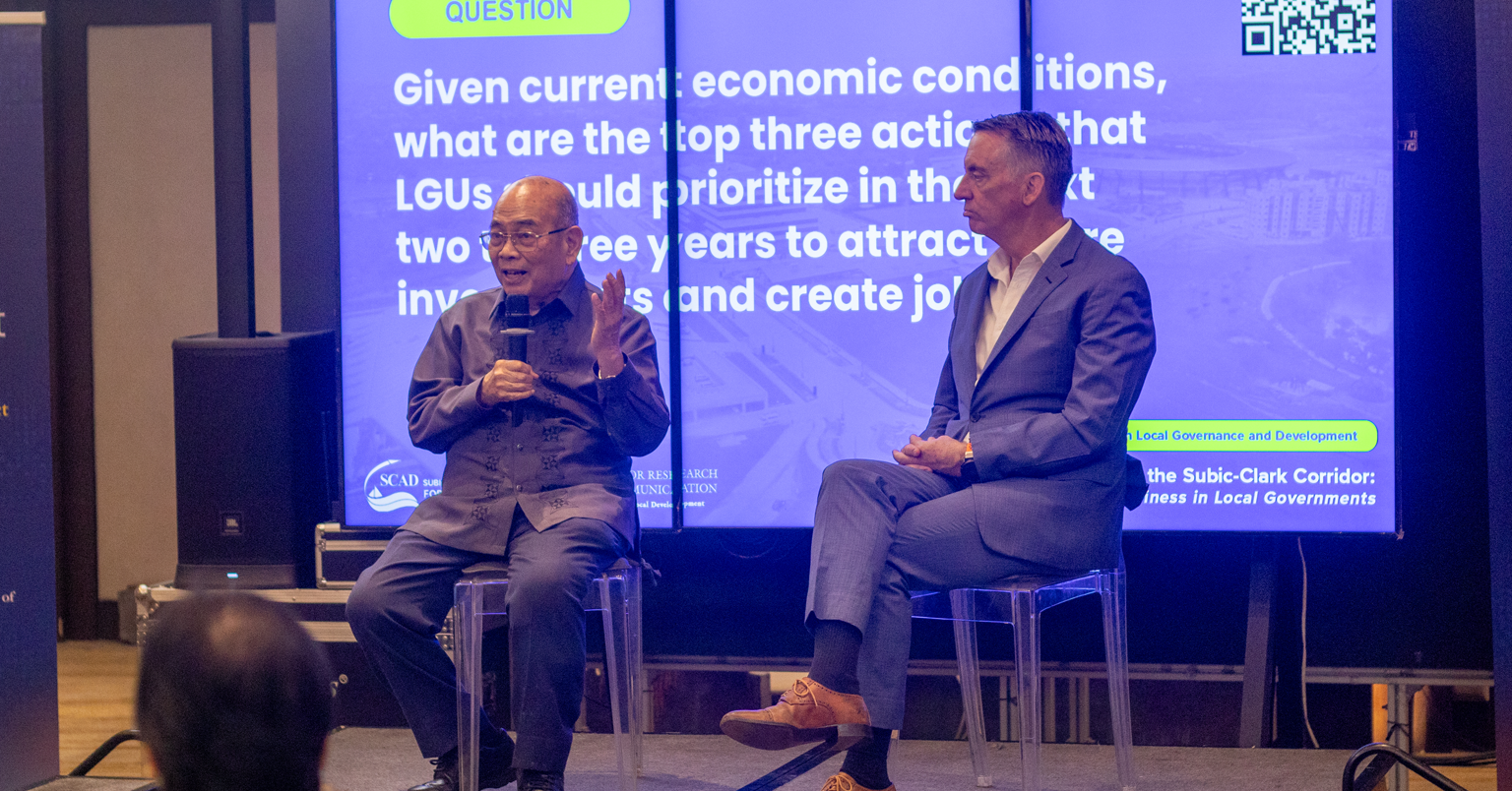
In Photo: Economist Dr. Bernardo Villegas (L) and Senior Commercial Officer of the US Embassy in Manila Paul Taylor share their insights on the role of local governments in spurring investments in the Luzon Economic Corridor.
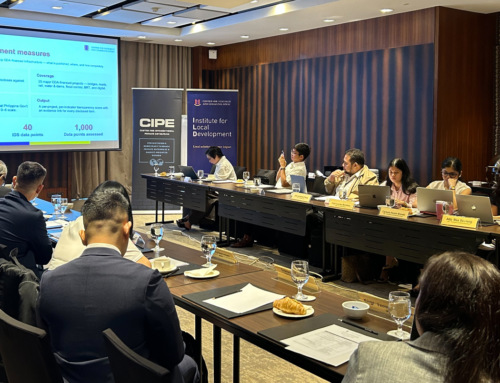
Angeles City, Philippines – Fourteen local government units gathered in Angeles City on June 3, 2026 to discuss ways to dismantle bureaucratic hurdles and streamline business permits to capture a massive influx of foreign direct investments (FDIs) under the newly-expanded Luzon Economic Corridor (LEC).
The LEC is a key partnership between the Philippines, Japan, and the United States to spur economic development in an area that accounts for almost 60% of the Philippines’ GDP by promoting investments in energy, transportation and logistics, digital connectivity, and advanced manufacturing. Recently, the initiative welcomed eight other countries: Australia, Canada, Denmark, France, Italy, the Republic of Korea, Sweden and the United Kingdom.
Economist Dr. Bernardo Villegas of the University of Asia and the Pacific highlighted the importance of the Corridor in the overall growth of the Philippine economy given its size and strategic importance. “The Philippines can bring poverty levels down to single digits if GDP growth is constant at 8 percent. But this is only possible with the help of FDI, and the LEC will play a vital role in realizing these investments. Local governments must be ready to play their part.”
Investments are already flowing, according to Paul Taylor, Senior Commercial Officer of the US Embassy in Manila. He cited major logistics giants UPS and FedEx as American companies who have already expanded operations in the LEC in anticipation of the rapid growth, stressing the need for LGUs to reduce “investment friction” by creating a more investor-friendly environment.
The business community, represented by Chris Edwards of the American Chamber of Commerce, echoed this sentiment. He underscored the importance of a simplified LGU permitting process with clear timetables including transparent, trackable processes that reduce manual intervention to build investor confidence
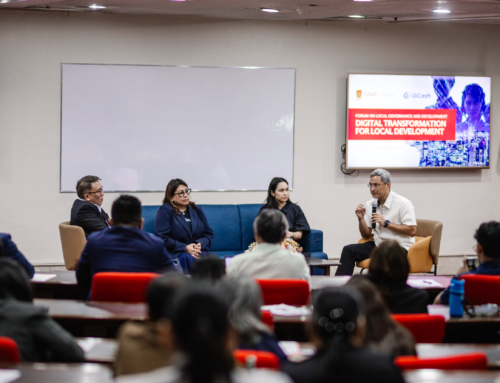
A key focus of the forum was digital transformation. Deputy Director General of the Anti-Red Tape Authority (ARTA) Lea-Grace Salcedo presented national initiatives like the electronic business one-stop-shop (e-BOSS) system and a 24/7, AI-assisted public complaints handling system called TALA. She urged LGUs to continuously reengineer their processes by “dismantling redundant procedures.”
The power of digital transformation in improving efficiency was highlighted by Marge Mejia, the President of the National Business Permitting and Licensing Officers of the Philippines, and head of Quezon City’s BPLO. She shared the impressive results achieved when the city transitioned to a 100% online business permitting system: a 350% increase in private capital investments, 25% growth in new business registrations, and a 15% expansion in local business tax collection, with transaction times as fast as three minutes to renew a business permit. Meanwhile, Abul Khayr Alonto II of the Bataan Provincial Government showcased Bataan’s transformation into a leading investment destination through comprehensive ease-of-doing-business reforms, including a one-stop center that serves OFWs and investors.
The forum was a joint initiative of the Subic-Clark Alliance for Development (SCAD) – an agency under the Office of the President tasked to coordinate development in the Subic-Clark-Tarlac Corridor – and the Center for Research and Communication (CRC), a think tank that supports local governance reform through its Institute for Local Development.
The forum was capped with the signing of a memorandum of understanding between SCAD and CRC to collaborate on strengthening LGU capacity in key areas including improving the ease of doing business, digital transformation, water security, and investment planning. These efforts are aimed at preparing local governments for the influx of investors and projects in the LEC, accelerating economic development across Luzon and the entire Philippines.
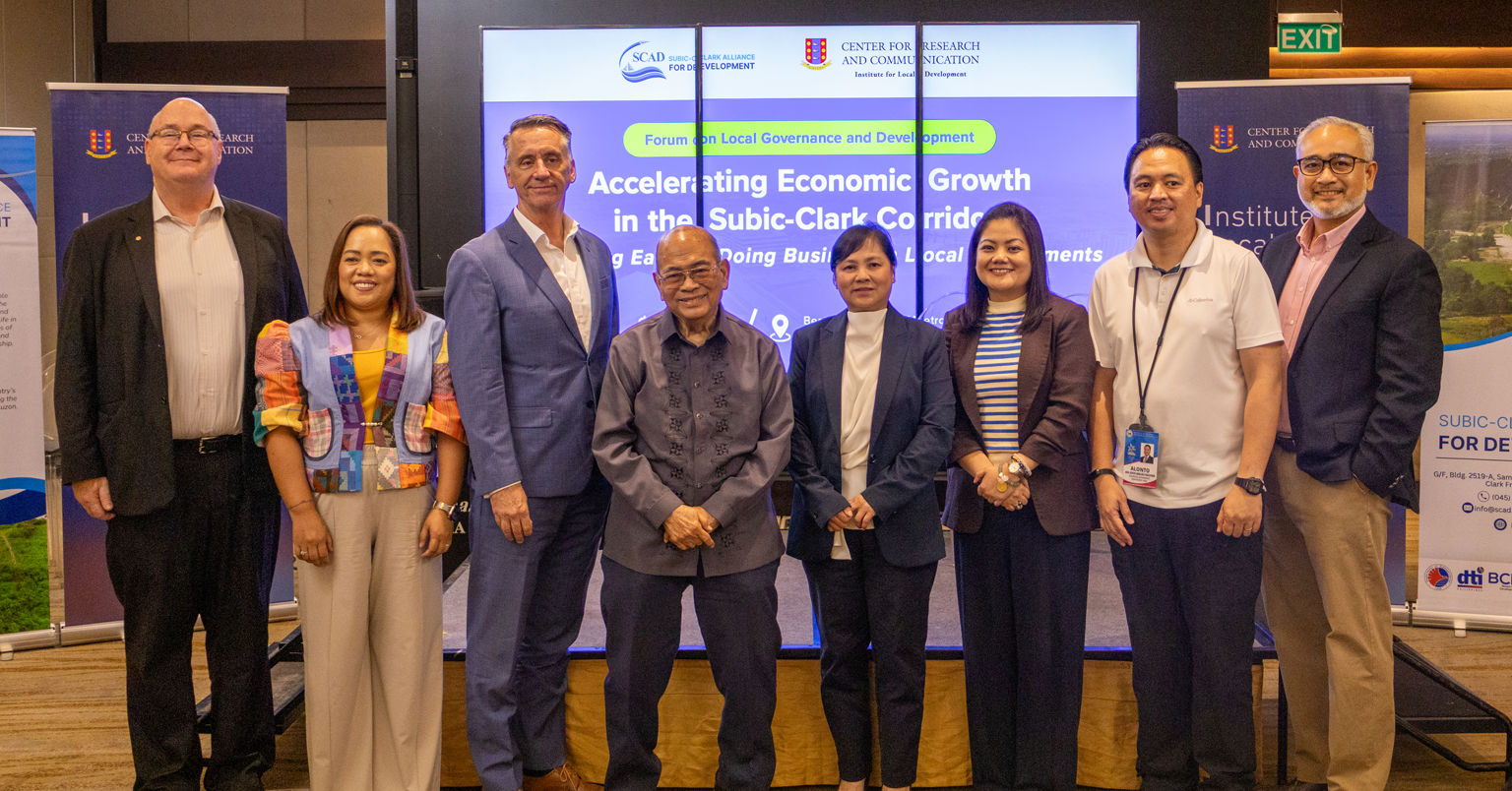
In Photo: Presenters at the Ease of Doing Business Forum organized for the local governments of the Subic-Clark-Tarlac corridor who discussed ways in which LGUs can facilitate the anticipated influx of foreign direct investments created by the Luzon Economic Corridor initiative. (L-R) Chris Edwards of AMCHAM, Marge Mejia of Quezon City BPLO, Paul Taylor of the US Embassy, Dr. Bernardo Villegas of UA&P, Atty. Carminda Fabros of SCAD, ARTA DDG Lea-Grace Salcedo, Abdul Khayr Alonto II of the Bataan Provincial Government, and Mir Tillah of CRC Institute for Local Development.
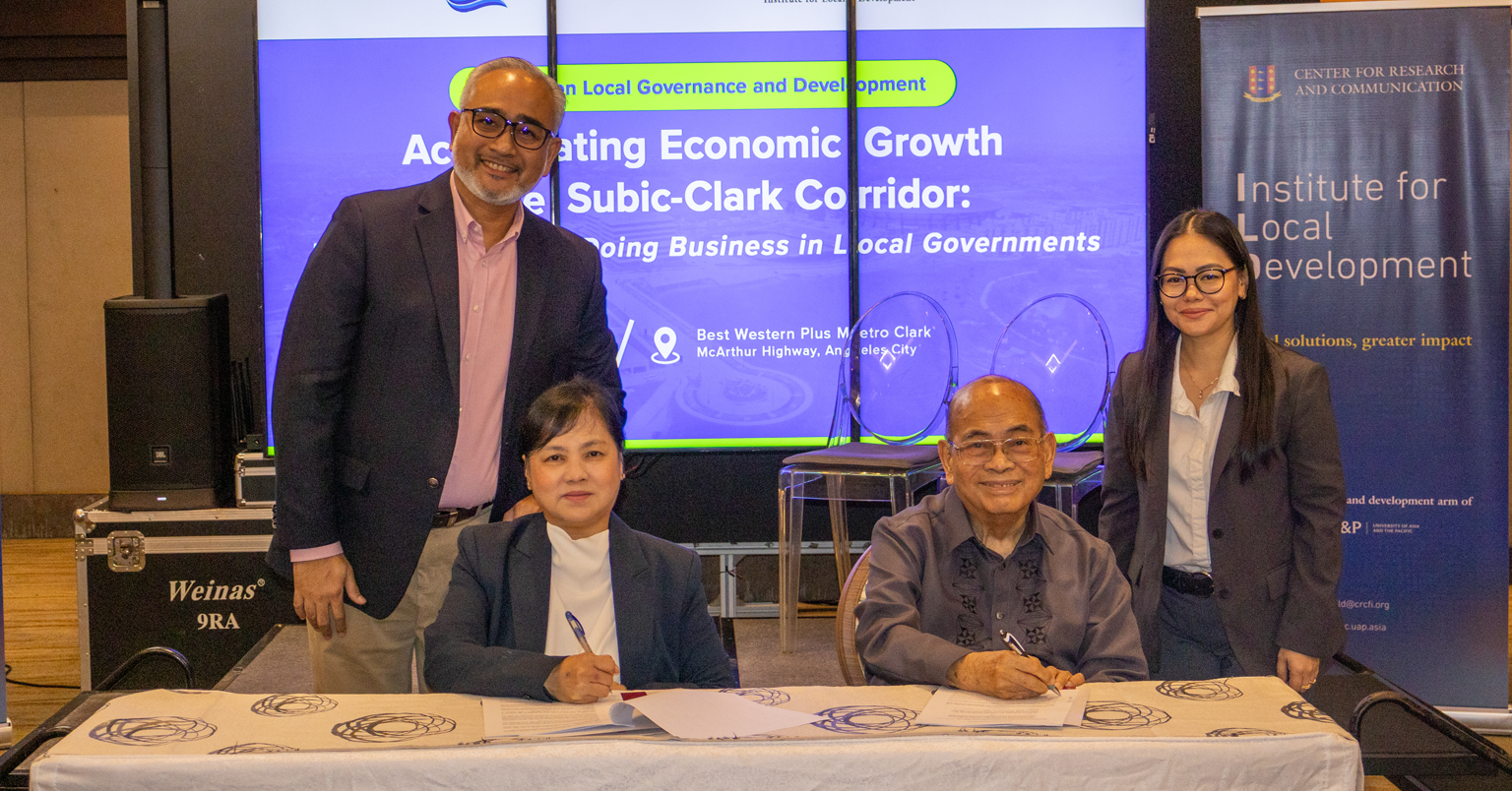
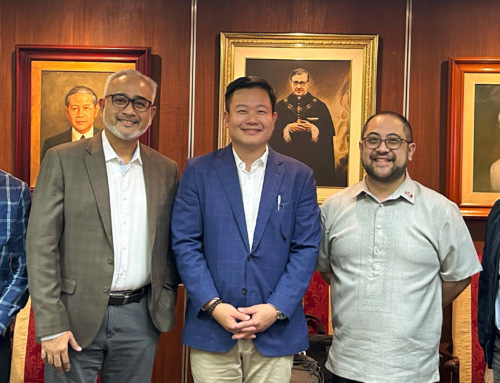
In Photo: Atty. Carminda Fabros of SCAD and Dr. Bernardo Villegas of UA&P & CRC signed a partnership agreement to collaborate on initiatives for the Subic-Clark Corridor. The signing was witnessed by CRC Institute for Local Development Director Mir Tillah and SCAD Director for Finance, Administration, and Legal Atty. Aliw V. Del Rosario.
About SCAD
The Subic-Clark Alliance for Development (SCAD) is a government body mandated with coordinating and accelerating the development of the Subic-Clark-Tarlac Corridor as a globally competitive logistics, investment, and economic hub. It serves as a coordinating mechanism for national government agencies, and the 17 local governments and four special economic zones in the area. SCAD champions transparent and effective governance to foster a more competitive and business-friendly investment climate among its affiliated local government units.
About CRC
The Center for Research and Communication (CRC) is one of the leading think tanks in the country and serves as the research, advocacy, and development arm of the University of Asia and the Pacific (UA&P). In 2025, CRC established the Institute for Local Development (CRC-ILD) to support local government units in advancing sustainable and inclusive development in areas such as economic governance, water security and climate action, digital transformation, health, infrastructure and critical minerals.